

Key Takeaways
- Intelligent agents in AI are reshaping industries by automating tasks and making smart decisions.
- They're used in various fields, from healthcare to finance, and even in everyday gadgets.
- These agents can learn from their environment, improving over time.
- There are ethical and privacy concerns that need addressing as these agents become more prevalent.
- The future of intelligent agents includes more collaboration and smarter systems.
Understanding Intelligent Agents in AI |
Defining Intelligent Agents
Intelligent agents are like the brain of artificial intelligence, capable of making decisions and carrying out actions autonomously. They interact with their surroundings, pursue specific goals, and learn from experiences to enhance their performance over time. Think of them as digital problem-solvers, constantly adapting to new information and environments. Their ability to learn and adapt makes them invaluable in various fields, from healthcare to finance.
How Intelligent Agents Work
These agents operate through a combination of perception, decision-making, and action. Here's a simple breakdown:
- Perception: They gather data from their environment using sensors or inputs.
- Decision-Making: Based on the data, they process information to make informed choices.
- Action: They execute actions to achieve their goals or respond to changes.
Different types of agents handle these steps in unique ways. For instance, simple reflex agents rely on predefined rules, while model-based agents use internal models to make decisions. An AI agent can be as straightforward as a chatbot or as complex as a self-driving car.
The Evolution of Intelligent Agents
The journey of intelligent agents has been remarkable. Initially, they were basic rule-based systems, but now they've evolved into sophisticated entities capable of learning and adapting. This evolution includes:
- Reactive Machines: Early AI that responded to specific inputs with set actions.
- Limited Memory Agents: They make decisions using recent data, improving over time.
- Theory of Mind Agents: These understand emotions and intentions, enhancing human interaction.
- Self-Aware Agents: The most advanced, recognizing their existence and making independent choices.
Intelligent agents are not just about automation; they represent a shift towards more interactive and intuitive technology. As they continue to evolve, their potential applications and impact on society are boundless.
Applications of Intelligent Agents Across Industries

Transforming Healthcare with AI Agents
Healthcare is one of the most exciting areas where intelligent agents are making a big splash. These AI systems are helping doctors and nurses by analyzing patient data, predicting illnesses, and even suggesting treatments. Imagine an AI agent that can sift through thousands of medical records in seconds to find the best treatment plan for a patient. This not only speeds up the process but also makes it more accurate.
- AI agents in healthcare can:
- Analyze patient data to predict potential health issues.
- Assist in diagnosing diseases by comparing symptoms with vast medical databases.
- Recommend personalized treatment plans based on individual patient history.
By integrating intelligent agents into healthcare, we’re not just improving efficiency; we’re potentially saving lives by catching diseases early and personalizing treatment like never before.
Revolutionizing Retail Experiences
In retail, AI agents are changing the way we shop. From personalized recommendations to managing inventory, these agents are like the silent helpers in the background. They look at what you’ve bought before and suggest what you might like next. This makes shopping not only easier but also more fun.
- Key roles of AI agents in retail include:
- Offering personalized product recommendations based on past purchases and browsing history.
- Managing stock levels efficiently to reduce waste and increase availability.
- Enhancing customer service through chatbots that can handle queries 24/7.
Enhancing Financial Services
The financial world is complex and fast-paced, but AI agents are stepping in to make things smoother. They help banks and financial institutions by monitoring transactions for fraud, managing investment portfolios, and even predicting market trends. With AI agents, financial services are becoming more secure and efficient.
- Applications in finance include:
- Fraud detection by analyzing transaction patterns in real-time.
- Robo-advisors that manage investments by studying market conditions.
- Predictive analytics to assess risks and forecast market changes.
In these industries and more, intelligent agents are becoming indispensable. They're not just tools; they're partners in innovation, reshaping how we live and work. Whether it's through enhancing safety in autonomous vehicles or transforming retail with personalized experiences, the impact of AI agents is profound and growing every day.
The Impact of Intelligent Agents on Society
AI agents are increasingly becoming an integral part of our daily routines. From virtual assistants that help manage our schedules to smart home devices that automate lighting and temperature, these technologies are simplifying everyday tasks. Imagine waking up to a home that knows your morning routine and adjusts settings accordingly. This is the reality intelligent agents are crafting for us.
- Convenience: Automating mundane tasks like setting reminders or controlling home appliances.
- Efficiency: Streamlining processes such as ordering groceries or scheduling appointments.
- Personalization: Tailoring experiences based on individual preferences and habits.
Intelligent agents are not just about convenience; they are about creating a personalized environment that adapts to each user's needs, making life not only easier but also more enjoyable.
As AI agents become more embedded in society, ethical questions arise. How do we ensure these systems act in our best interests? The potential for bias in AI decision-making is a significant concern. Developers must strive for transparency and fairness in AI algorithms to prevent discrimination and ensure equitable outcomes.
Important Ethical Aspects:
- Bias and Fairness: Ensuring AI systems do not perpetuate existing biases.
- Transparency: Making AI decision-making processes understandable to users.
- Accountability: Holding developers and companies responsible for AI actions.
Privacy is at the forefront of discussions about AI agents. These systems often require access to vast amounts of personal data to function effectively. For example, virtual assistants might need to know your location or access your calendar. This raises questions about how data is collected, stored, and used.
- Data Security: Implementing robust security measures to protect sensitive information.
- User Consent: Ensuring users are aware of what data is being collected and how it is used.
- Anonymity: Developing techniques to anonymize data to protect user identity.
In conclusion, while intelligent agents offer numerous benefits, they also bring challenges that must be addressed. Balancing innovation with ethical and privacy concerns is crucial as we integrate these technologies into our lives.
Technological Advancements in Intelligent Agents |
From Simple Bots to Complex Systems
Intelligent agents have come a long way from their early days as basic, rule-based chatbots. Initially, these bots could only follow simple scripts without understanding context or adapting to new situations. Today, they have evolved into sophisticated systems capable of real conversations and handling complex tasks. This transformation marks a significant leap in AI capabilities, enabling agents to perform a wide range of functions across various industries.
Key advancements in intelligent agents include:
- Reactive Machines: These are the simplest form of AI, designed to react to specific inputs with predefined actions.
- Limited Memory Agents: They use recent information to make decisions, allowing for more dynamic responses.
- Theory of Mind Agents: These agents can understand emotions and intentions, improving interactions with humans.
- Self-Aware Agents: The most advanced, capable of recognizing their own existence and making independent choices.
The Role of Machine Learning
Machine learning is at the heart of intelligent agents, allowing them to learn from data and improve over time. This capability is crucial for adapting to new challenges and optimizing performance. Machine learning algorithms enable agents to analyze patterns, predict outcomes, and make informed decisions.
In business operations, AI agents act as digital co-workers, enhancing efficiency and customer experience. They utilize machine learning to adapt and improve, providing personalized support and 24/7 service. By 2025, the integration of AI agents and RPA is expected to optimize processes, leading to increased productivity and customer satisfaction.
Future Innovations in AI Agents
The future of intelligent agents is poised for remarkable innovations. As technology advances, these agents will become even more integrated into our daily lives, enhancing everything from personal assistants to complex industrial systems. Major tech companies like OpenAI, Google, and Microsoft are at the forefront of developing sophisticated AI systems that will drive these innovations.
The true potential of intelligent agents lies in their ability to learn and adapt, continuously improving their performance over time. As we move forward, the synergy between AI and human intelligence will open up new possibilities for innovation and efficiency.
Challenges and Opportunities for Intelligent Agents |
Overcoming Technical Barriers
Intelligent agents, while transformative, face significant technical challenges. One major hurdle is the computational complexity required to run advanced AI systems. As these agents become more sophisticated, they demand more powerful hardware and energy resources. This not only raises costs but also poses environmental concerns due to increased energy consumption. Researchers are actively working on solutions like specialized AI chips and algorithm optimization to make these systems more efficient.
Another technical challenge is the potential for unpredictable behavior in autonomous systems. As intelligent agents are deployed in critical areas like healthcare and transportation, unforeseen scenarios could lead to serious consequences. For instance, autonomous vehicles need to handle unexpected road conditions safely. Continuous testing and validation are essential to mitigate these risks.
Ensuring Fairness and Transparency
Ethical considerations are paramount when deploying intelligent agents. Data privacy is a significant concern, as these systems often require vast amounts of data to function effectively. Unauthorized data collection can lead to privacy violations and diminish user trust. Techniques like federated learning, which allows AI models to be trained on decentralized data, are being explored to reduce privacy risks.
Bias and fairness in AI algorithms are also critical issues. Algorithms can unintentionally reflect biases present in their training data, potentially leading to unfair outcomes. This is particularly concerning in sensitive areas like hiring and law enforcement. Ensuring inclusivity and transparency in AI development is crucial to address these concerns.
Transparency in AI decision-making is another challenge. Users need to understand how AI agents make decisions, especially in areas like finance and healthcare. Explainable AI (XAI) is an emerging field that aims to make AI processes more interpretable and transparent.
The Future of AI Collaboration
The future of intelligent agents is filled with exciting possibilities. Researchers are focusing on improving coordination between AI systems and humans, which could lead to more efficient problem-solving and decision-making. Advanced learning algorithms, such as reinforcement learning and transfer learning, promise to make agents more adaptable and capable of learning from smaller datasets.
Ethical AI is another area of focus, with efforts to develop frameworks that make AI systems more transparent, fair, and accountable. Engaging in ongoing dialogue about the role of intelligent agents in society is crucial to harness their full potential while mitigating risks.
The journey ahead for intelligent agents is both exciting and daunting. It will require collaboration between technologists, ethicists, policymakers, and the public to shape a future where AI enhances human capabilities without compromising our values or safety.
The Future of Intelligent Agents in AI
Predictions for AI Development
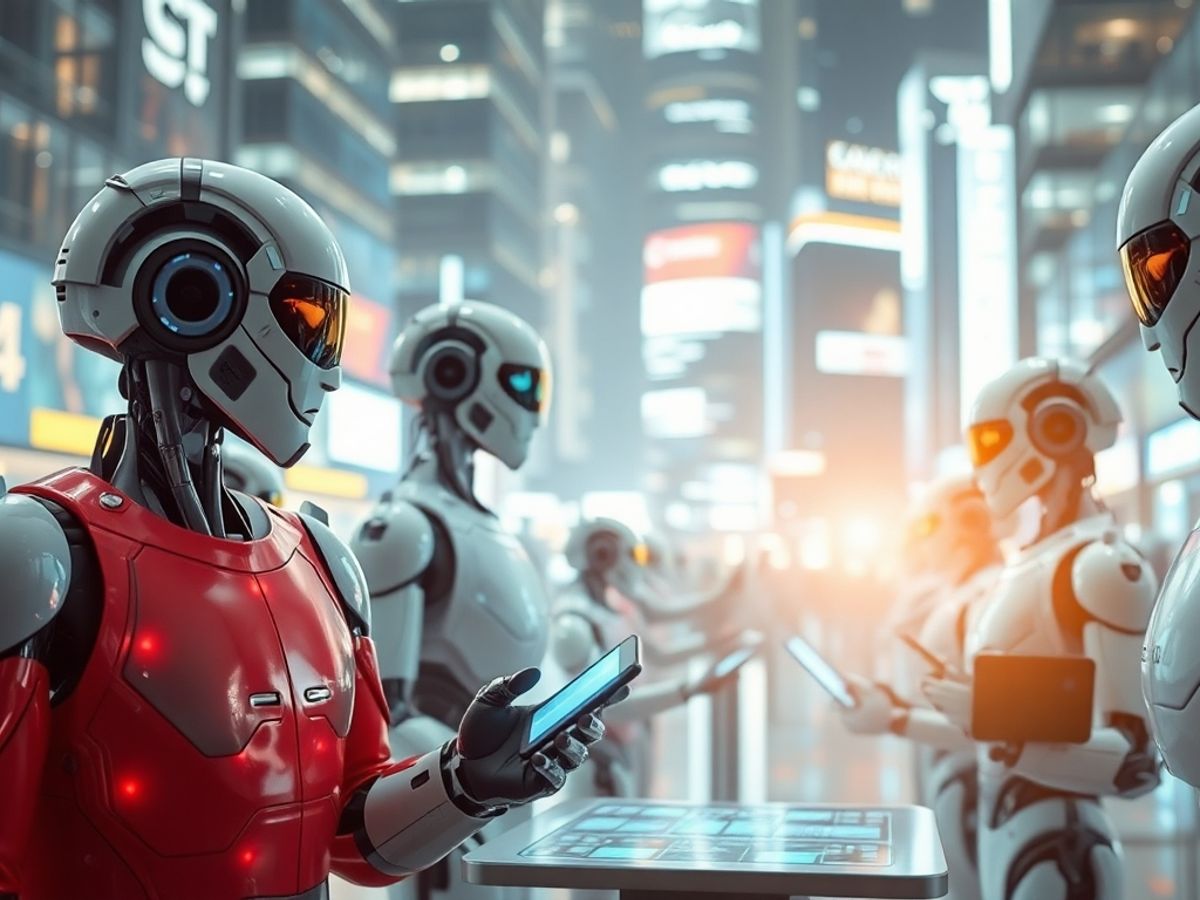
The future of intelligent agents is looking pretty exciting. These systems are expected to not just become smarter but also more adaptable, learning from smaller datasets and improving coordination with humans and other AI. By 2028, AI might handle a significant portion of decision-making in workplaces, thanks to advancements in machine learning and autonomous decision-making. This evolution will likely see intelligent agents becoming more involved in daily tasks, making them indispensable in various sectors.
The Role of AI in Smart Cities
Smart cities are on the rise, and intelligent agents are playing a crucial role in their development. These agents help manage resources efficiently, optimize traffic flow, and even enhance public safety. With AI-driven systems, cities can reduce energy consumption and improve quality of life for residents. Here's how AI agents are transforming urban living:
- Traffic Management: Real-time data analysis to minimize congestion.
- Energy Efficiency: Smart grids that adjust power distribution based on demand.
- Public Safety: Surveillance systems that detect unusual activities and alert authorities.
AI Agents in Education and Learning
In the education sector, AI agents are revolutionizing how students learn. These agents can provide personalized learning experiences, adapting to each student's pace and style. Virtual tutors, powered by AI, offer assistance in subjects ranging from math to language arts, making education more accessible. Here are a few ways AI is changing education:
- Personalized Learning: Tailoring lessons to individual needs.
- Interactive Experiences: Using VR and AI for immersive learning environments.
- Real-time Feedback: Offering instant feedback to help students improve.
As intelligent agents continue to evolve, their potential to transform industries and society is immense. The focus must remain on creating systems that are not only advanced but also ethical and aligned with human values.
The journey ahead is both thrilling and challenging, with opportunities to harness AI for the greater good while addressing ethical and technical hurdles. As we embrace these intelligent agents, collaboration between technologists, ethicists, and policymakers will be key to a future where AI enhances human capabilities without compromising our values or safety.
Conclusion
So, here we are at the end of our journey through the world of intelligent agents. It's pretty wild to think about how these smart systems are changing everything around us. From helping us shop smarter to making our cities run better, they're everywhere. But it's not just about the cool tech. We also have to think about the big questions, like privacy and fairness. As we keep moving forward, it's clear that intelligent agents will be a big part of our future. They're not just tools; they're partners in shaping a new world. Let's make sure we use them wisely.
- - -
This article was written with the assistance of AI to gather information from multiple reputable sources. The content has been reviewed and edited by our editorial team to ensure accuracy and coherence. The views expressed are those of the author and do not necessarily reflect the views of Dex223. This article is for informational purposes only and does not constitute financial advice. Investing involves risk, and you should consult a qualified financial advisor before making any investment decisions.